Ceremony or Ritual: Where Participation Changes the Shape
Ceremony or ritual? See how a neighbourhood gathering can use shared action, clear choices and practical alternatives to make its civic purpose tangible.
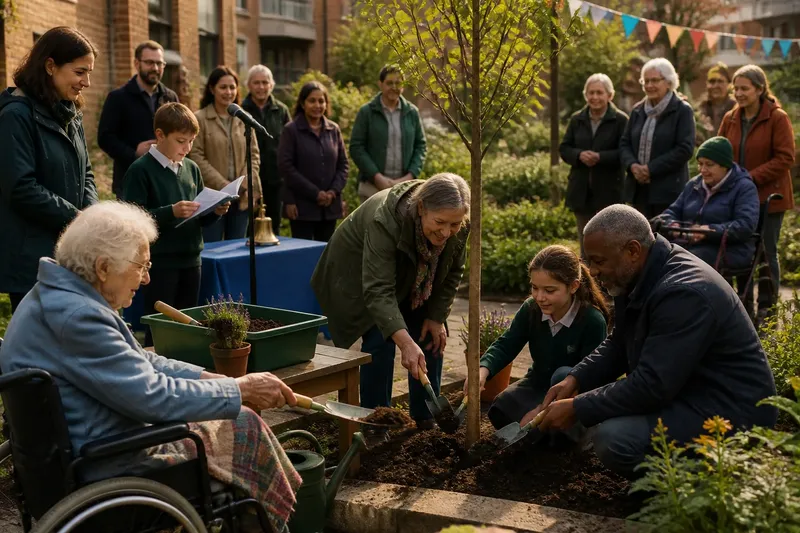
At a neighbourhood hall, a volunteer smooths a blue cloth across a table as damp coats brush past the doorway. A bell sounds, a pupil reads a welcome, and residents carry a young tree outside. The organiser sets down a trowel and invites the group to help plant it. That is where the distinction between ceremony and ritual comes into focus: the first arranges a public occasion; the second gives people an action through which to express its meaning.
Ceremony and ritual
Communities use these words in different ways, but they can describe distinct parts of one gathering. A ceremony is an arranged occasion with a recognisable sequence, such as a welcome, a reading and a closing. A ritual is a meaningful action, often repeated, that expresses a relationship or intention.
At a civic event, a ceremony might mark the opening of a garden, while planting its first tree supplies the ritual. The distinction is not a ranking: a quiet act of witness can matter, and a shared gesture does not automatically create agreement. It helps organisers ask what the event is designed to do, and how its symbols connect to a place or public responsibility.
Words, objects and meaning
A ceremony often makes its purpose legible through words, sequence and setting. A speaker can explain why a garden matters to the neighbourhood; a ribbon, bell or planted tree can give that explanation a visible focus. Ritual adds an enacted element: people lay flowers, share a response or take part in a recurring act of remembrance.
Objects do not carry one fixed meaning everywhere. A tree may suggest continuity to one resident and raise questions about who will care for it to another. A thoughtful organiser explains the intended meaning without insisting that everyone interpret the symbol identically.
A garden takes shape
Imagine a fictional residents’ group opening a small public garden. In the first arrangement, a chair welcomes guests, explains why the group chose the site and invites a pupil to read a few lines. Everyone listens. The sequence gives the occasion a clear civic frame, but the speaker carries most of the work of explaining it.
Now the organiser invites residents to add soil around the tree. The group contributes to the event’s central action rather than only hearing about the garden’s purpose. The gesture can make care for a shared place tangible, but it cannot settle questions about access, maintenance or who gets a say in the garden’s future. Those need their own conversation and decisions.
Say the invented group has a narrow path beside the planting area and several guests arrive using walking frames. The organiser moves the soil tray to a stable table beside the path, explains that people can add soil, pass the trowel or watch, then invites volunteers to water the tree after the gathering. The observable result is that guests can choose among clear roles without having to crowd around the planting hole; the trade-off is that the group may need to arrange a separate watering rota rather than treating the ceremony itself as a care plan.
Choices for organisers
A shared action needs more than a symbolic object. Before the event, check the practical details below; each observation points to a decision and an alternative.
- Invitation: If the wording explains the action and why it matters, keep it; if it only says “everyone must join in”, replace it with a clear invitation and an option to watch.
- Access: If people can reach the action without negotiating a crowded or awkward route, use that arrangement; if not, move the materials to an accessible spot or offer a seated role.
- Choice: If guests can decline without being singled out, retain the invitation; if declining would feel conspicuous, name a quiet alternative before anyone is asked to act.
- Materials: If the object is easy to see, handle and pass safely, use it; if not, choose a simpler object or let a helper carry out the gesture on someone’s behalf.
- Explanation: If the speaker connects the gesture to a specific place or shared responsibility, proceed with that wording; if the link is vague, explain the purpose or choose an action that fits it more clearly.
- Follow-up: If the symbolic act has a practical continuation, name who will take responsibility; if nobody has agreed to do that work, describe the gesture as a mark of intention rather than a promise of future care.
Questions about ceremony or ritual?
Can a ceremony include a ritual?
Yes. A formal welcome and reading can frame an action such as planting a tree or laying a flower. The ceremony shapes the occasion; the ritual gives it an enacted moment.
Does watching count as taking part?
Watching can be a considered way to attend, especially when someone cannot or does not wish to perform the central gesture. Organisers can respect that choice by avoiding language that treats visible action as a measure of commitment.
What makes a ritual civic?
A connection to public life gives a ritual civic meaning: it might concern a shared place, a community responsibility or a collective act of remembrance. The setting and explanation matter; a gesture alone does not speak for every person present.
Must everyone make the same gesture?
No. A common purpose can hold a gathering together while people take different roles, such as speaking, passing an object or observing. Offer alternatives that preserve choice without suggesting that everyone experiences the event in the same way.
Clear invitations
Instructions should be easy to hear and understand, including for anyone who arrives late. “We’re adding soil to mark our shared care for this garden. You’re welcome to take a turn, pass the trowel, or watch from where you are” explains the action and leaves room to decline.
Practical arrangements shape who can join. Keep the central object visible, avoid forcing a crowd through a narrow space and consider whether the action requires standing, speaking or handling a material. For food, fire, plants or other items with specific risks, follow the relevant label, organiser guidance and local rules; consult a qualified professional where specialist advice is needed.
In the invented garden scene, residents add soil, the pupil waters the tree and the organiser closes with an invitation to visit. The ceremony gives the gathering a public shape; the ritual makes one part of its purpose visible through action. Asking who can take part, what they are being asked to share and what happens afterwards keeps ceremony or ritual grounded in the life of the community, not just the words spoken on the day.